Biochemistry
The Department of Biochemistry focuses on the study of chemical structures, biological molecules, and metabolic processes that govern health and disease in the human body. Along with Anatomy and Physiology, Biochemistry forms an essential foundation of basic medical sciences and plays a vital role in medical education, research, and diagnostic services.
The department emphasizes the understanding of cellular components, enzymes, proteins, carbohydrates, lipids, nucleic acids, and biochemical pathways involved in normal body functions and disease mechanisms. Teaching is designed to integrate theoretical knowledge with clinical applications, enabling students to correlate biochemical concepts with patient care and disease diagnosis.
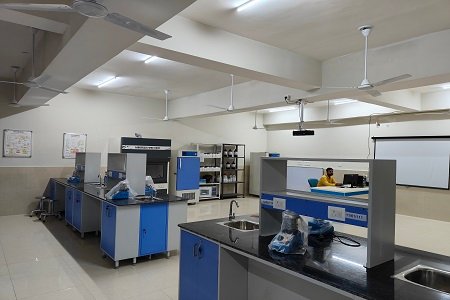
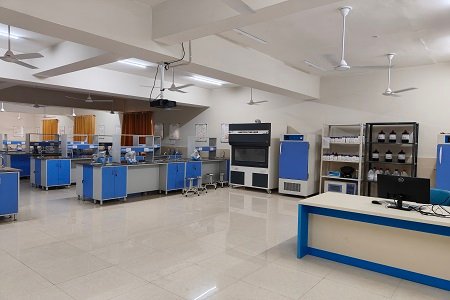
The department regularly collaborates with clinicians to discuss clinical case scenarios and biochemical correlations that improve students’ understanding of disease processes and laboratory interpretation. In addition to academics, the department provides advanced diagnostic laboratory services supported by modern equipment, automated analyzers, and skilled laboratory professionals.
Facilities & Services
Clinical Biochemistry Laboratory :
Advanced laboratory equipped with automated analyzers and modern diagnostic instruments for accurate biochemical testing.
Routine and Specialized Investigations :
Testing services including blood glucose, lipid profile, liver function tests, kidney function tests, hormonal assays, and electrolyte analysis.
24×7 Diagnostic Services :
Round-the-clock laboratory support for emergency and inpatient diagnostic requirements.
Academic Teaching and Training :
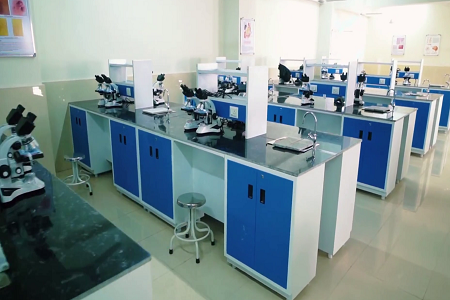
Comprehensive teaching programs covering metabolism, molecular biology, enzymology, and clinical biochemistry.
Clinical Case Discussions :
Interactive sessions integrating biochemical mechanisms with clinical conditions and disease management.
Research Activities :
Support for research projects, scientific studies, and advancements in biochemical and molecular sciences.
Quality Control and Laboratory Standards :
Implementation of quality assurance protocols to ensure reliable and accurate laboratory reporting.
Student Skill Development :
Practical training in laboratory techniques, interpretation of biochemical investigations, and analytical procedures.
The department also contributes significantly to interdisciplinary healthcare by supporting clinicians with timely diagnostic services and promoting evidence-based medical practice. Through academic excellence, research, and advanced laboratory facilities, the department plays a key role in modern medical education and patient care.